Chris Platt, Commercial Director of Re-Gen Robotics discusses why operators responsible for tank cleaning in the Oil&Gas industry should embrace the opportunities presented by the emerging technology of robotics.
Tank cleaning plays a critical role in ensuring the efficiency and safety of oil storage facilities. It represents
an important step in the preparation process for risk-based inspection as a route to assuring storage tank integrity.To gain reliable information about tank wall thicknesses, corrosion rates and the confirmation of the absence of metal degradation, it is vital to have a clean surface on which to perform non-destructive testing. Hence,industry needs to be able to clean its tanks and it needs to be able to do this safely, quickly and efficiently.
Traditional practices for storage tank cleaning, such as manned confined space entries, have led to and continue to lead to, tragically avoidable fatalities and accidents. Indeed, the U.S. Bureau of Labour Statistics reports fatalities from confined space incidents occurring at a rate of 2 per week in the U.S. during the period 2011-2018.Manned entry into confined spaces containing toxic and flammable atmospheres is inherently hazardous. Accordingly, as operators strive for enhanced safety and risk reduction, the adoption of robotic cleaning methods is becoming increasingly favoured. It reflects the drive across industry towards inherent safety, where risk is avoided rather than controlled. This principle is explicitly endorsed by both the UK Health & Safety Executive and the U.S. Chemical Safety Board. If human operators are isolated from the hazards, risks can be reduced by orders of magnitude, or as Trevor Kletz, one of the pioneers of safety management said, “people who aren’t there, can’t be killed”. Whilst regulators do note the desirability of inherent safety, it could be argued that they could push more strongly for the use of techniques such as robotics which have emerged over recent years and are now proven technology.
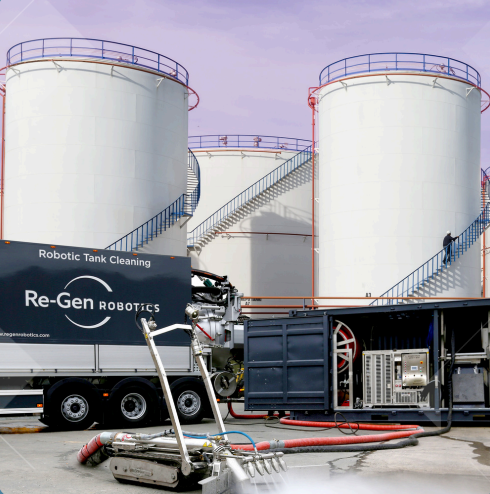
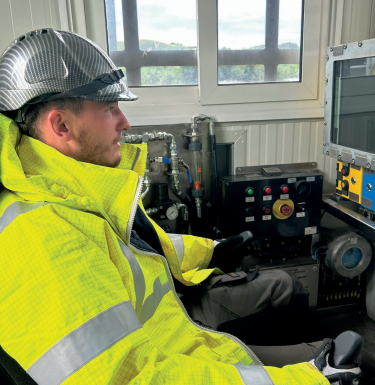
Re-Gen Robotics’ robots are Zone 0 Ex-certified and are hence able to operate in tanks containing the most volatile of atmospheres. They are thus intrinsically safe as well as being inherently safe. The robot, or remotely operated vehicle (ROV) is driven by an operator based in a containerised, air-conditioned control room, usually located within the tank bund. Using forward and rearward facing lights and cameras and hydraulic control, the human component of the system is situated remotely from the hazard in accordance with sound risk management approaches. A result of this, is that risks from fatigue and human factors, both topics of much focus in risk management discussions, are also reduced.
The team at Re-Gen Robotics has a highly specialised background in the field of oil tank cleaning and their experience encompasses all conventional tank designs. Within these tanks, a full range of oil feedstocks and products from fuel oil through to white products and crude oil can be handled. We believe that robotic cleaning is the way forward and we have invested heavily in support of that. We have, over the last two years, introduced advances in track technology where we have demonstrated the ability to operate within lined tanks without damaging the lining. We have also heavily developed our suction heads, at the ‘business end’ of the robot to improve sludge and liquid capture. Our suction heads can add diluent, steam or high pressure hot water as required by the characteristics of the fluid being removed from the tank. Where we use heat to reduce the viscosity of the pumped fluid, we can maintain temperature through our suction hoses and vacuum trucks.
In under five years, we have eliminated 15,000+ hours of CSE cleaning in tanks. Over 60 tanks, including cleans for a number of UK base.d oil majors, have been completed.
Industry players who are embracing robotic tank cleaning are also discovering advantages in terms of operational efficiency. Re-Gen Re-Gen Robotics’ technologies can perform tank cleaning tasks with increased speed, precision, and consistency compared to other approaches. The team at Re-Gen Robotics has a highly specialised background in the field of oil tank cleaning and their experience encompasses all conventional tank designs. 14 INSIGHT MAGAZINE Robotics’ technologies can perform tank cleaning tasks with increased speed, precision, and consistency compared to other approaches. Tank downtime can be reduced by up to 40 per cent, mainly because of the short time it takes to assemble the equipment and the fact that staff are not required to enter the confined space of the tank.
By implementing robotic technologies, oil tank cleaning companies can achieve substantial cost savings. From arrival onsite, when cleaning white product tanks, the entire tank cleaning system can be set up in four hours, which is quicker than the time taken for human crews to prepare to enter a tank. The initial investment in implementing automated systems may be offset by long-term benefits, including reduced labour costs, lower insurance premiums, and minimised expenses associated with accidents, injuries, and litigation.
Additionally, the optimisation of cleaning processes through robotic technologies can lead to efficient resource utilisation, such as decreased water and chemical usage, further contributing to cost reduction and environmental sustainability.
Government bodies worldwide have recognized the hazards associated with manual tank entry, leading to the implementation of stringent safety regulations. Companies that fail to comply with these standards face severe penalties, legal consequences, and reputational damage. Embracing robotic cleaning technologies demonstrates a commitment to safety, ensuring compliance with regulations and avoiding potential fines. This proactive approach enhances the industry’s image and safeguards companies from adverse impacts on their share prices.
In today’s interconnected world, reputation is everything. News of accidents, injuries, or fatalities in the oil tank cleaning industry spreads fast, leading to negative public perception of affected companies. Adverse incidents can irreparably damage a company’s reputation, undermining investor confidence and directly impacting share prices. By prioritising robotic cleaning, companies can protect their brand image, enhance stakeholder trust, and maintain a positive market valuation.
The implementation of robotics in the oil tank cleaning industry is creating a paradigm shift that is promoting safety by eliminating fatalities and accidents. Tank operating companies can not only protect human lives but also create a sustainable and profitable future for themselves. The key driver to embrace this technology is achieving far greater technical results while having fewer people risking injury or their health. In our view, it is time to prioritise safety, embrace innovation and work towards a more efficient oil tank cleaning industry.